When someone can no longer tell you what they love, their taste graph still can.
Encore helps dementia caregivers find the songs, films, places and tastes of a loved one’s youth, and turns them into short daily sessions that learn from how they respond.
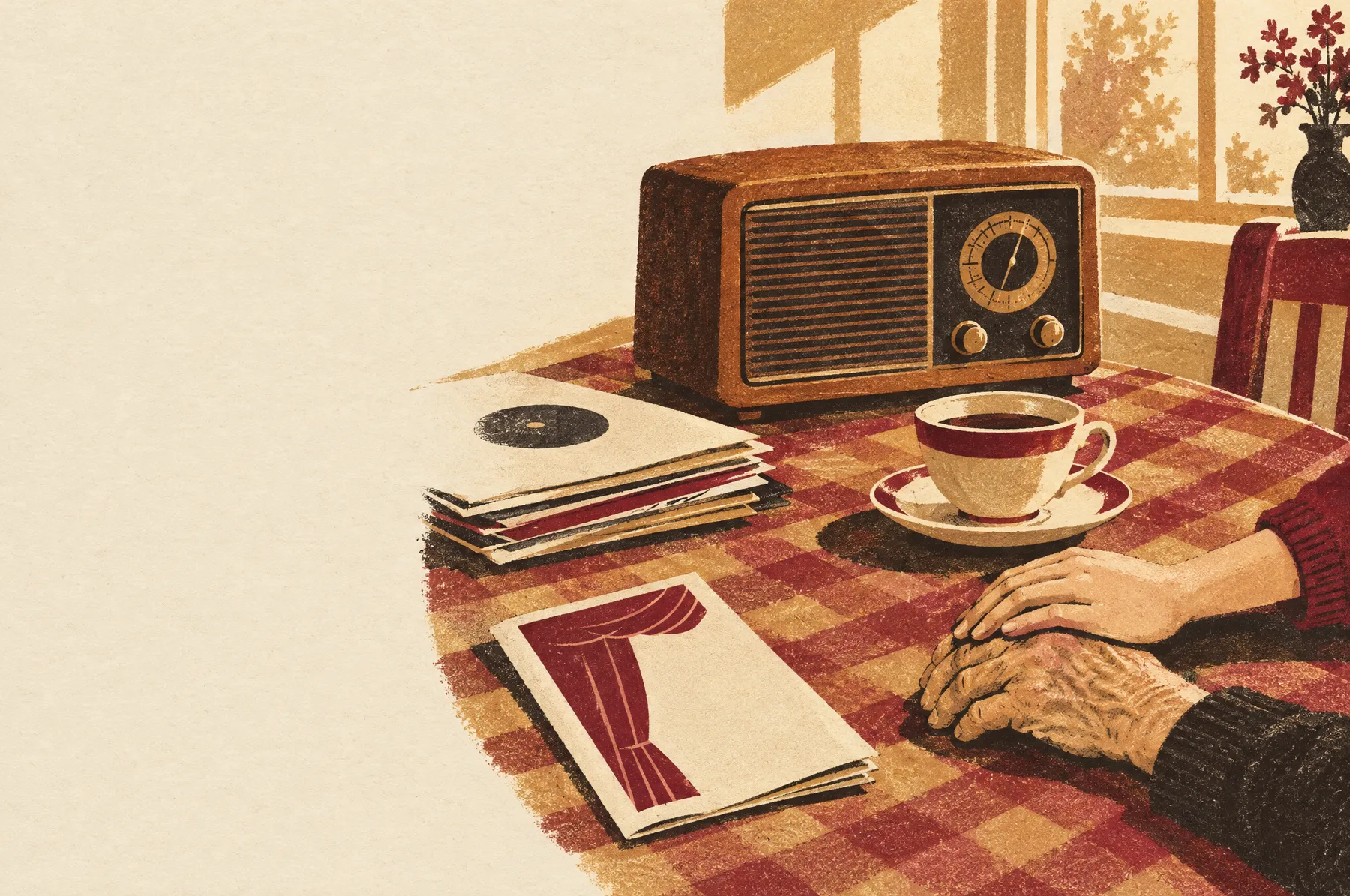
A generic playlist knows the decade. Encore knows the person.
- 1
Share a few memories
A first name, a birth year, a hometown, and two to five things they loved. A singer, a film, a dish.
- 2
Watch Encore rebuild their world
Encore follows Qloo’s taste graph outward from those memories, scoped to the years they were 10 to 30 and the place they grew up. Every pick shows which memory led to it.
- 3
Play a short session together
Six to eight songs, clips, places and tastes, one at a time. Tap how they responded. Tomorrow’s session leans into what lit them up.
Try it with an example
Each example opens as your own copy, so you can play the session, tap reactions and watch Encore learn.
For memory-care facilities
An activities director picks a few residents. Encore pools what each of them loved into one Qloo query and puts the songs, films and shows that connect the most people first, with every pick showing whose favourites led to it.
Plan a group sessionWhat the research says, honestly
Long-term musical memory relies on brain regions that show relatively less atrophy and metabolic decline in Alzheimer’s disease, which may be why familiar songs can still land when other memories fade. (Jacobsen et al., Brain, 2015)
A 2025 Cochrane review found music-based therapy probably improves depressive symptoms slightly and may help social behaviour, but probably does not reduce agitation. So Encore is a tool for connection and mood, not a treatment. (Cochrane Database of Systematic Reviews, 2025)
More than 55 million people live with dementia worldwide, a number projected to reach 78 million by 2030. Most are cared for at home by family. (World Health Organization)